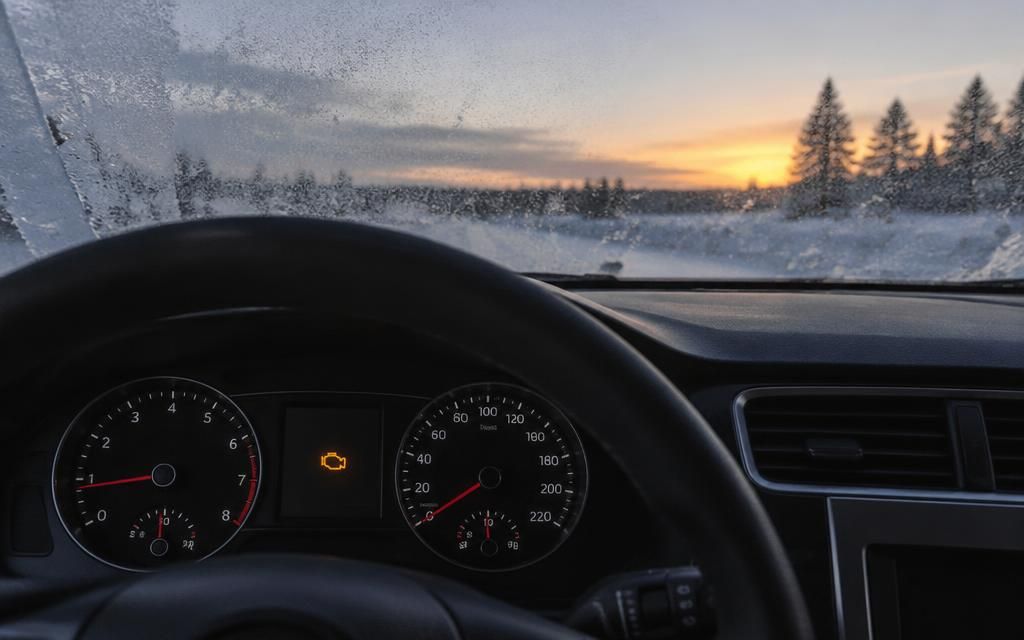
It’s −28°C, you start your truck, and the check engine light comes on. Should you drive? Should you call a shop? Is something broken, or is it just the cold? In Moose Jaw winters, cold-weather check engine lights are one of the most common reasons drivers call us, and the answer depends on a few specific things you can check yourself before booking a diagnosis.
Quick answer
A solid (steady) check engine light means drive gently and book a diagnosis soon. A flashing check engine light means stop driving and call us. A flashing light signals an active misfire that can damage the catalytic converter. Call 306-693-1288.
Why cold weather sets off check engine lights
Modern vehicles have dozens of sensors monitoring how the engine runs. Cold weather stresses all of them. Sensor readings drift outside normal range, fluid viscosity changes, batteries drop voltage, and small leaks or loose connections that were invisible in summer suddenly cause faults. Below are the most common cold-weather triggers we see in the shop.
1. Low battery voltage during cold cranking
When it’s −30°C, your battery loses up to 50% of its cranking power. If the battery is already weak, cold starts can drop voltage below what the engine computer needs to run properly, triggering codes for sensors that are actually fine. A battery test is often the fastest diagnosis for a light that came on the first cold morning of the year.
2. Fuel mixture running rich or lean in cold
Cold engines run rich (more fuel) to start and warm up. If the engine takes too long to warm up (because of a stuck-open thermostat, a bad coolant temperature sensor, or a plugged air filter), the computer sees an abnormally rich mixture and flags it. Codes P0171, P0172, P0174, and P0175 (system too rich or too lean) are common winter codes that clear up once the underlying issue is fixed.
3. Oxygen sensor and emissions codes
Oxygen sensors (O2 sensors) live in the exhaust and read fuel mixture. They rely on reaching operating temperature (over 300°C) to work properly. In extreme cold with short trips, where the engine never gets fully hot, O2 sensors can log false codes. If you only drive short trips in winter, we sometimes see intermittent O2 sensor codes that clear up on a longer drive.
4. Loose or frozen gas cap
The number-one cause of a check engine light on any vehicle is a loose gas cap. In winter it gets worse: cold makes the seal shrink, ice can form around the cap, and gloved hands often don’t tighten fully. If your light comes on right after you filled up, check the gas cap first. Tighten it until it clicks three times. Drive for a few days; if it doesn’t clear on its own after 3–5 drive cycles, come see us.
5. Cracked or leaking vacuum hoses
Rubber vacuum hoses under the hood get hard and brittle with age. Extreme cold makes them crack, causing air leaks that throw off fuel mixture readings and trigger evap (evaporative emissions) codes like P0440, P0442, or P0455. This is one of the most common cold-weather diagnoses we do. The fix is usually inexpensive if caught early.
6. Frozen or malfunctioning EVAP purge valve
The evap system captures fuel vapours from the gas tank. Its purge valve can stick or freeze in cold weather, especially if there’s moisture in the system. This triggers evap codes and sometimes affects how the engine idles when cold. Usually a shop repair.
Is it safe to drive with the light on?
Steady light
Solid (steady) check engine light: usually safe
A steady light means the computer has logged a fault but the engine is running acceptably. Drive gently, avoid heavy towing or hard acceleration, and book a diagnosis when convenient. If the light comes on and there are no other symptoms (no rough idle, no power loss, no strange smells), it’s safe to drive to work or home.
Flashing light
Flashing check engine light: pull over
A flashing light means active engine misfire. Unburnt fuel is going into the exhaust and can destroy the catalytic converter in as little as 20 minutes of driving. If your light is flashing: pull over safely, shut the engine off, and call us or arrange a tow. A cat converter is expensive; catching a misfire early is not.
Light + symptoms
Light with symptoms: book soon
If the light is on and you also notice: rough idle, hesitation on acceleration, engine surging, poor fuel economy, or a strange smell. Don’t wait. These symptoms mean the underlying problem is affecting how the engine runs, and continued driving can make it worse or cause additional damage. Call us and we’ll get you in quickly.
Gas cap first, then call
If your light came on right after a fill-up, check the gas cap and drive normally for 3–5 days. Many evap codes clear themselves once the cap is properly sealed. If the light stays on after that, book a diagnosis. We charge for diagnostic time (call for current pricing), and we tell you what we find before recommending repair.
What we do when you bring it in
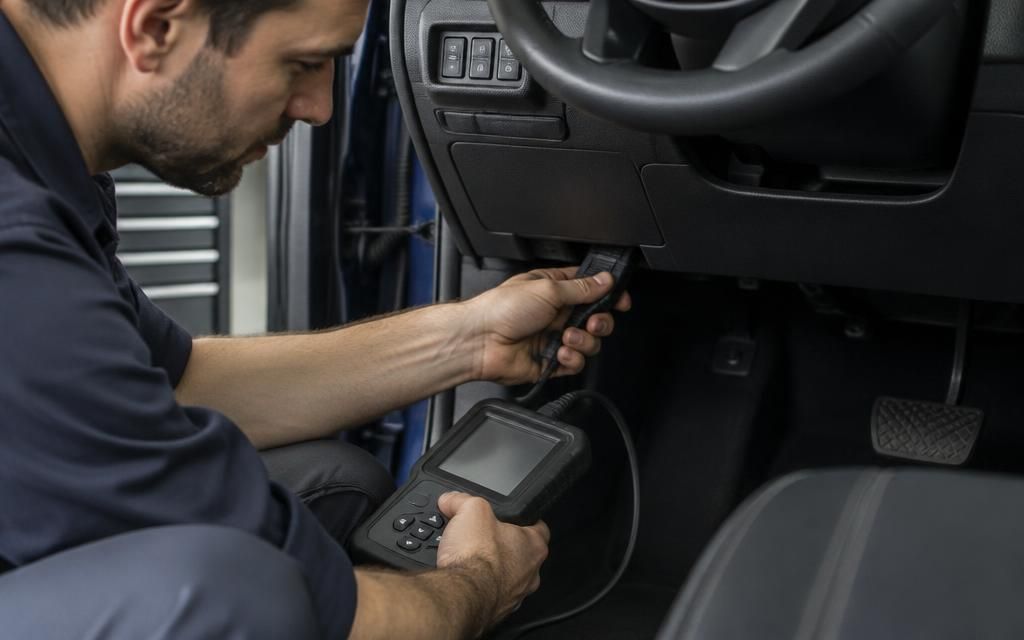
We connect a scan tool to the vehicle’s OBD-II port and pull the fault codes. Those codes tell us which system flagged the fault, but they don’t always tell us why. From there, we investigate: freeze-frame data (what the engine was doing when the code set), live sensor readings, physical inspection of hoses and connectors, and sometimes a road test. We tell you what we find, what we recommend, and what it will cost, before we do any repair work.
When to call us
- Check engine light is flashing (call today or tow; do not drive far)
- Light is on with rough idle, hesitation, or power loss
- Light won’t clear after 5+ drive cycles with a tightened gas cap
- Light came on right after a cold start and stayed on
- You’ve got a code reader and don’t know what the codes mean
- You want an honest opinion before authorizing repair work
Call 306-693-1288. We’re at 175 2nd Avenue NW in Moose Jaw, Monday to Friday 8:00 AM to 5:00 PM.
About Young and Young Automotive
Young and Young Automotive Ltd. (Minute Muffler Brake & Wheel) has been Moose Jaw’s family-owned auto shop since 1992. Doug and Dawn Young own and operate; three Journeyman Automotive Service Technicians on staff. We diagnose with a plan, tell you straight, and give you a written price up front.